

3. What Grief Taught Me About Trusting God
Jackie Baker's Grief Journey


Some grief arrives like weather.
Some grief arrives like a tsunami.
You survive the first wave only to realize the landscape of your life has completely changed. The familiar is gone. The future looks unrecognizable. And somewhere in the wreckage sits the unbearable question:
How do I keep living after this?
When Jackie Baker lost her son Sebastian to suicide in 2017, she entered a kind of sorrow few people know how to speak about honestly. There were casseroles and condolences, prayers and awkward silences. There were well-meaning comments that wounded more than healed. There were long nights, unanswered questions, and the exhausting ache of trying to survive something that never should have happened.
But there was also God.
Not in tidy explanations.
Not in quick healing.
Not in spiritual clichés.
But in the dark tunnel where Jackie could not see Him — only cling to the promise that He was still there.
In this conversation, Jackie speaks with remarkable tenderness and honesty about grief, motherhood, faith, identity, and the slow work of learning how to breathe again after devastating loss. Her words are not polished around pain; they are shaped inside it.
And maybe that is why they matter so much.
YouTube link at the bottom!
The Long Road Through Grief Still Leads Somewhere
There are some losses that divide your life into before and after.
Before the phone call.
Before the knock at the door.
Before the sentence that rearranges the entire architecture of your world.
For Jackie Baker, that moment came in September 2017 when police arrived at her home to tell her that her son Sebastian had died by suicide.
Even now, nearly nine years later, she speaks about him with the tenderness only a mother carries. Not as a statistic. Not as a tragedy headline. But as her son — funny, thoughtful, soccer-loving, Star Wars-loving Sebastian.
That distinction matters deeply to her.
Because one of the hardest parts of suicide loss is how quickly a person’s entire identity becomes attached to the way they died.
People grow quiet around suicide grief. Some become uncomfortable. Others begin searching for explanations, assigning blame, or offering spiritual formulas that only deepen the wound.
Jackie remembers how isolating that silence felt.
When someone dies from cancer, people often rally around the family. They speak openly about courage and suffering and bravery. When someone dies in an accident, the grief is publicly acknowledged as tragic and heartbreaking.
But suicide carries another layer — stigma.
The unspoken questions hover in the room:
Could this have been prevented?
Did the parents miss something?
Whose fault was it?
Jackie and her husband wrestled with all of it.
“If only I had done this.”
“If only I had said that.”
“If only I had let him come home.”
She calls these thoughts “the laments of the if onlys,” and they became one of the chapters in her book, Messy Mourning.

But eventually she learned something painful and freeing: grief cannot heal while constantly negotiating with the past.
The outcome had already happened.
No amount of replaying old conversations could rewrite it.
And yet letting go of those questions did not happen overnight.
Nothing about grief happens overnight.
That may be one of the most compassionate truths Jackie offers in this conversation: grief is not linear, tidy, or predictable. It does not follow a schedule. It does not care about cultural expectations. It certainly does not end after a year.
In fact, Jackie says it took nearly seven years before she finally felt a genuine sense of peace begin to return.
Seven years.
Not seven weeks.
Not seven inspirational steps.
Seven years of walking through sorrow one day at a time.
That honesty feels rare in a culture obsessed with recovery timelines and emotional efficiency.
Jackie compares traumatic grief to surviving a tsunami. At first, the waves completely consume you. Everything familiar is destroyed. You are drowning in shock, numbness, confusion, exhaustion, paperwork, memories, and survival.
Then eventually the water recedes enough for you to see the devastation left behind.
And after that comes the long work of learning how to live again.
At first, she says, it feels like drowning constantly.
Then maybe one day your head rises above the water for a moment.
Then another wave hits.
Later you begin doggy paddling.
Eventually you can swim.
The waves still come, but they no longer destroy you in the same way.
It is one of the most accurate descriptions of grief imaginable because it allows space for both progress and pain to exist together.
Jackie is careful not to present healing as forgetting.
She still misses Sebastian during the World Cup because soccer was something they loved together. Holidays still ache. Certain songs still undo her. She still wishes she could text him about games and memories and ordinary things.
But grief has changed shape over time.
“The stories are sweeter now,” she says.
In the early years, it was difficult to see beyond the trauma of how Sebastian died. Now the family can remember who he was with more laughter than tears.
That shift did not happen accidentally.
Jackie and her family made intentional decisions about how they would survive grief together.
One of the most moving parts of the conversation is hearing how differently each family member mourned. Jackie wanted to immediately clear out Sebastian’s room. Her husband could barely walk into it. Their daughter wanted to wear his clothes and still does years later.
Same loss. Different grief.
That realization became another chapter in Jackie’s book because so many families unknowingly judge one another’s mourning styles.
One person needs to talk.
Another withdraws.
One clings tightly to memories.
Another avoids them completely.
Grief can create misunderstandings even inside loving families.
Jackie admits there were moments when she feared grief might swallow their marriage too. Someone even told her shortly after Sebastian’s death that divorce rates are high among parents who lose children to suicide.
The comment devastated her.
Not because it was malicious, but because it arrived when everything already felt fragile.
So Jackie and her husband made a deliberate decision to keep turning toward each other and toward God.
They prayed together daily, even when they did not feel like praying. They kept going to church even when every service ended in tears. They continued listening to Scripture even when concentration felt impossible.

Jackie describes grief as walking through a dark tunnel where she could not see Jesus, but chose to believe He was still beside her because He promised He would be.
That image lingers.
Not triumphant certainty.
Not emotional victory.
Just stubborn trust.
“Are you willing to lay Sebastian on the altar?”
At the time, she assumed the moment was about Sebastian’s future. Years later she realized the invitation had always been about her own trust in God regardless of the outcome.
Not trust in explanations.
Not trust in understanding.
Trust in God Himself.
That kind of faith is difficult to articulate because it does not remove pain. It simply refuses to surrender hope inside pain.
Jackie says the Psalms became her survival language during those years. She listened to Scripture daily while walking, sometimes absorbing only fragments, sometimes hearing nothing at all except the repetition of God’s presence.
But the words mattered.
The lament psalms especially gave her permission to be honest before God — angry, grieving, exhausted, confused.
Modern Christian culture often rushes people toward victory language too quickly. Jackie’s story gently pushes against that impulse. She reminds listeners that lament is not weakness. Scripture is full of people crying out in sorrow, confusion, and heartbreak.
David did it.
Job did it.
Jeremiah did it.
Even Jesus wept.
There is something profoundly healing about hearing someone say grief is allowed to be messy.
Not managed.
Not sanitized.
Not spiritually edited.
Messy.
That honesty also shapes Jackie’s advice about how to support grieving people.
One of the most surprising things she says is that people do not always need words.
Sometimes the most loving thing you can do is simply remain present.
Sit with them.
Bring coffee.
Listen to stories.
Say the deceased person’s name.
Jackie says she desperately wanted people to talk about Sebastian after he died. Many avoided his name because they feared upsetting her, but silence often felt lonelier than tears.
“He’s more than what he did,” she explains.
That sentence alone could change the way many grieving parents feel seen.
Jackie also emphasizes something many people misunderstand:
grief after suicide loss often takes significantly longer to stabilize emotionally than other forms of loss.
Research supports this, but grieving families frequently feel pressured to “move on” long before they are ready.
The pressure itself can become another wound.
That is part of why Jackie wrote Messy Mourning. She wanted grieving mothers to know there is still hope beyond devastating loss. She wanted them to know they are allowed to heal without betraying their child’s memory.
Because one of the hidden fears many grieving parents carry is this:
If I stop hurting so intensely, will people think I stopped loving them?
Jackie believes many mothers become trapped there. Their grief becomes fused with identity. Moving forward can feel like abandonment.
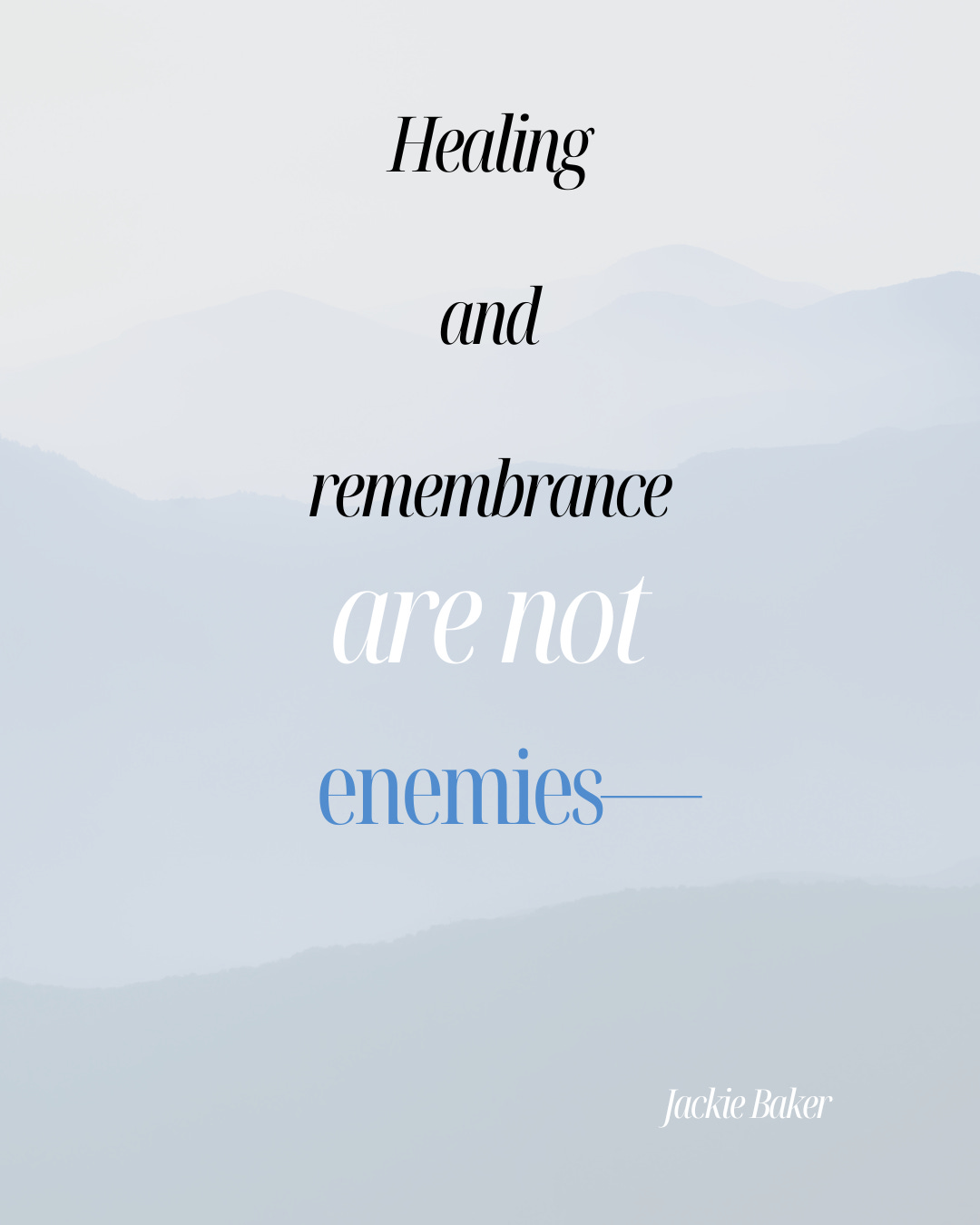
You can miss someone deeply and still build a meaningful life.
You can laugh again without dishonoring your grief.
You can experience joy while still carrying sorrow.
In fact, Jackie and her family eventually created beautiful traditions around Sebastian’s anniversary. Each year they travel somewhere together — Disneyland, New Zealand, Glacier National Park, London, even Tombstone, Arizona.
At first these trips were survival strategies. Jackie simply could not bear staying home on the anniversary.
Over time, however, the trips transformed into sacred remembrance.
Now the anticipation of September no longer carries only dread. It also carries connection, storytelling, laughter, tears, and shared love.
That transformation feels symbolic of the entire conversation.
Grief never disappears.
But over time, it can soften around the edges enough for beauty to coexist beside it.
Near the end of the interview, Jackie says something quietly profound:
“Even nine years later, I’m still writing the grief story. But now it’s more precious and fun.”
That sentence contains a kind of mature hope our culture rarely understands.
Not optimism.
Not denial.
Not pretending everything worked out neatly.
Just the hard-earned realization that love continues even after devastating loss.
And maybe that is what Messy Mourning ultimately offers readers: permission.
Permission to grieve honestly.
Permission to lament.
Permission to heal slowly.
Permission to laugh again.
Permission to trust God without having every answer.
Most of all, permission to believe that surviving unimaginable sorrow does not mean your life is over.
There is still life to live.
And somehow, mysteriously, God remains present in the middle of it.
If you’re standing where I was standing in September of 2017, I want you to hear this clearly: there is hope on the other side of this, even though it doesn’t feel possible right now, even though it might take years longer than anyone around you expects it to. You are not required to be done grieving on anyone else’s timeline. You’re allowed to lament. You’re allowed to not know what to say, or to say nothing at all, or to talk about your child every single day if that’s what you need. And you are not alone in the tunnel, even on the days you can’t see a single thing in front of you.
Jackie Baker’s book, Messy Mourning: Hope for Mothers Grieving the Loss of a Child by Suicide, is available now in hardback, Kindle, and softcover at jackiembaker.com, along with companion resources including a chapter-by-chapter journal, a Spotify playlist, a 30-day devotional through the psalms of lamentation, and a “Surviving the Firsts” guide for moms walking through the hardest anniversaries. You can also find her ongoing writing on grief, faith, and identity on her Substack.


I met some new friends where we shared our faith, our lives, and our wilderness stories at a retreat led by Jessica DeYoung. It was just what I needed.
Wow! So powerful a concept, "grief cannot heal while constantly negotiating with the past." Suicide has touch many families I know. Jackie Baker, and you, sharing this may help many still struggling with the loss and the ways to find, "Permission to grieve honestly.
Permission to lament.
Permission to heal slowly.
Permission to laugh again.
Permission to trust God without having every answer."
Thank you.
Thanks for sharing your story. My dad took his life and most people assume the grief is over after a certain amount of time, I recognized I had not even begun grieving, even after a whole year. The shock was too great.
So glad that you have been able to lean on the Lord and create a resource for others that will bless them immensely. 🙏