
• The Joy Quotient: Nicole Roth on Letting Go of the Applause and Finding Real Rest
Nicole Roth's Guide to Breaking Free

First, I want to welcome these new subscribers!
There’s a word for what a lot of us look like from the outside.
FINE.
Falling apart on the inside, nice exterior.
Nicole Roth didn’t come up with that acronym — she’s the first to say so. But she’s lived it, and she coaches women out of it every day. Four degrees. A thriving homeschool community. A reputation as a capable, achieving, put-together woman.
And inside? Running on empty, driving her daughters with the same relentless pressure she’d been running herself on, and not a clue that what was powering all of it was a potent cocktail of shame and fear.
It took one honest woman, a field trip, and a few minutes of blunt conversation to crack it open. And what Nicole found underneath changed everything.
This week on Just Talking About Jesus, she tells us what she found — and how she found her way out.
From Striving to Overflowing
Let me start by telling you who I used to be, because that’s the only honest way to tell you who I am now.
I was raised in what I’d call a very staunchly German bootstrap kind of home.
Pull yourself up. Be strong. Be capable.
My dad went to Notre Dame. Education wasn’t just valued — it was the currency of worth. And so from an early age, I learned the game: achieve, excel, earn the well done.
What I didn’t understand was that underneath all of that drive was something I didn’t yet have a name for.
A wound from childhood — peer rejection, the kind that cuts deep when you’re young and just want to belong — that had quietly convinced me that my value lived in what I could do and produce. And the painful, sneaky thing about that kind of wound is that the world applauds you for it.
Addiction is vilified. Achievement is applauded. And so I kept going, kept achieving, kept filling my plate, kept earning the approval — and it looked like success. It looked like faithfulness, even.
I became a dietitian. I homeschooled three daughters. I started a homeschool community that grew so large we had to divide it in two. The waiting list was real. The applause was real. And I genuinely did not see what was happening underneath.
The Field Trip Conversation
One day, on an ordinary field trip with my group, a mom approached me. No warning, no warmup — just a straight, loving, honest conversation that lasted only a few minutes. She said: the way you’re leading this group is making women feel like they can never be enough. Like they can’t meet your standards.
I thanked her. I got in my car.
And I sobbed all the way home.
Because the question that hit me wasn’t how dare she. It was who have I become? What kind of woman had I turned into in my own pursuit of all this driven, type-A behavior?
And the answer, when I let myself see it, was hard. I had been running my daughters the same way I ran myself. You have to do this. You have to be this. You have to make me look good. I hadn’t said those words out loud. But the message was coming through loud and clear.
Here’s the thing — the Lord had actually tried to warn me before that. In a rare quiet moment alone with Him, I heard it very clearly:
cease striving
And I heard it. I acknowledged it. I thought, okay, that was probably you. And then I kept charging ahead. Because I didn’t know how to do anything else.
So in his kindness — and it really was kindness, even though it felt humiliating — He pursued me in a way I couldn’t ignore. I stepped down from the group I’d been leading. I made my little speech and said goodbye, and I was honest enough to say:
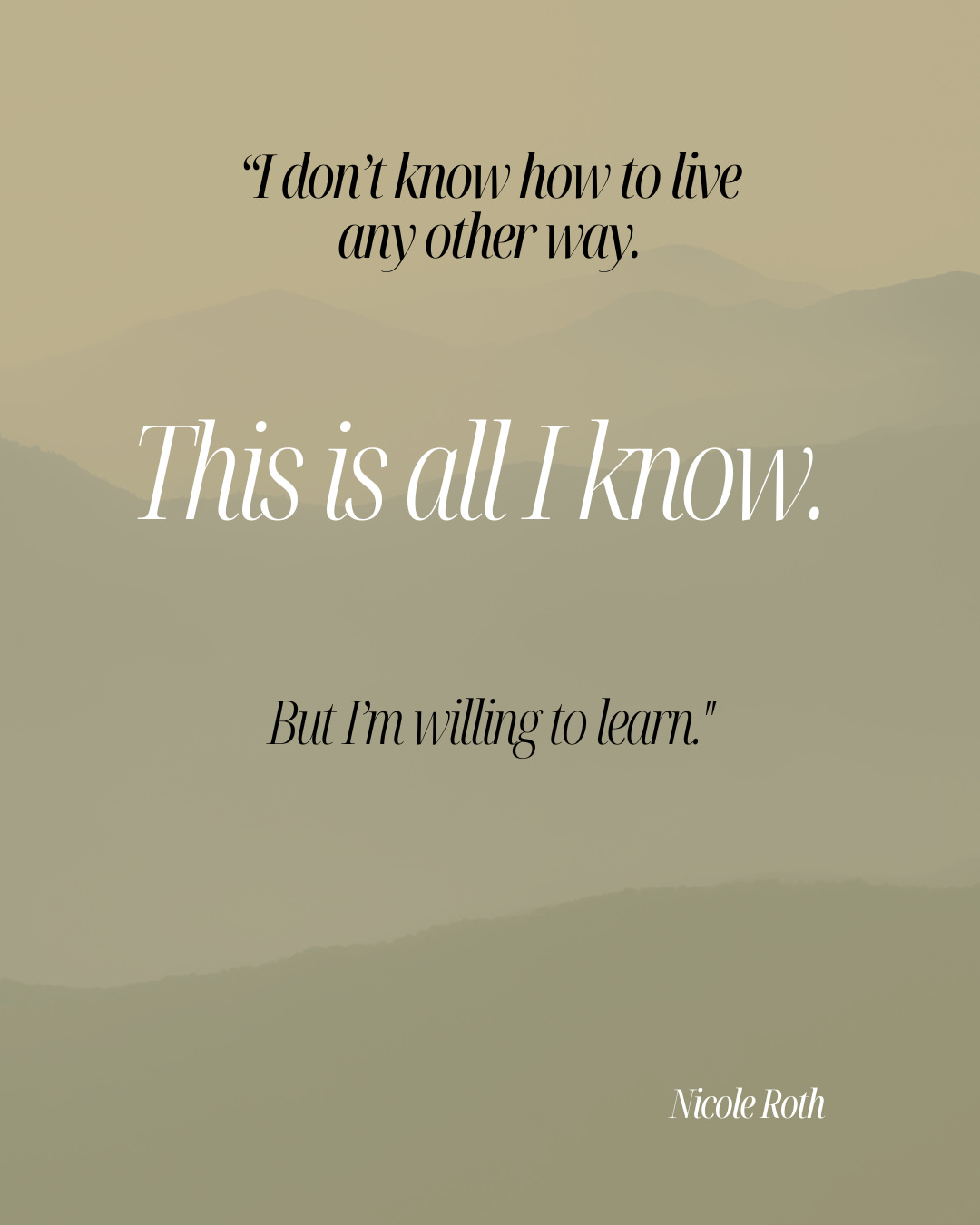
And that willingness — that small, shaky, hands-open posture — was enough for Him to start teaching me something completely new.
The 4 P’s — and What’s Really Driving Them
If I had to name the patterns I see most often in the women I work with — patterns I also lived for decades — they come down to four things.
Performance.
Perfectionism.
People pleasing.
And pretending.
I call them the 4 P’s.
I had three of them when I first started writing about this, and then a client I was working with one-on-one said, no, there are four. I said, what’s the fourth? She said: pretending. And I thought, yes. That’s exactly right.
These four patterns are all forward-facing. They’re all about the crowd — what do I need to do next to keep all the plates spinning, to keep everyone satisfied, to keep looking like I have it together? And here’s the brutal truth about all four of them: they work, in quotes. They produce results. They earn applause. And that’s exactly why they’re so hard to stop.
But what’s really underneath the 4 P’s — what I didn’t understand until I actually sat with Christine Caine’s book Unashamed and finally let myself examine it — is shame. Combined with fear. That, right there, is a horrible cocktail, and it quietly fuels so much of our decision-making if we’re not paying attention to the pattern.
I remember thinking I didn’t need that class. I had fear, yes — I knew that much about myself. But shame? I didn’t think I had it. And the Lord gently and clearly said, yeah, maybe you do. I bought the book, dove in, and thought: oh. Oh, this is actually running everything.
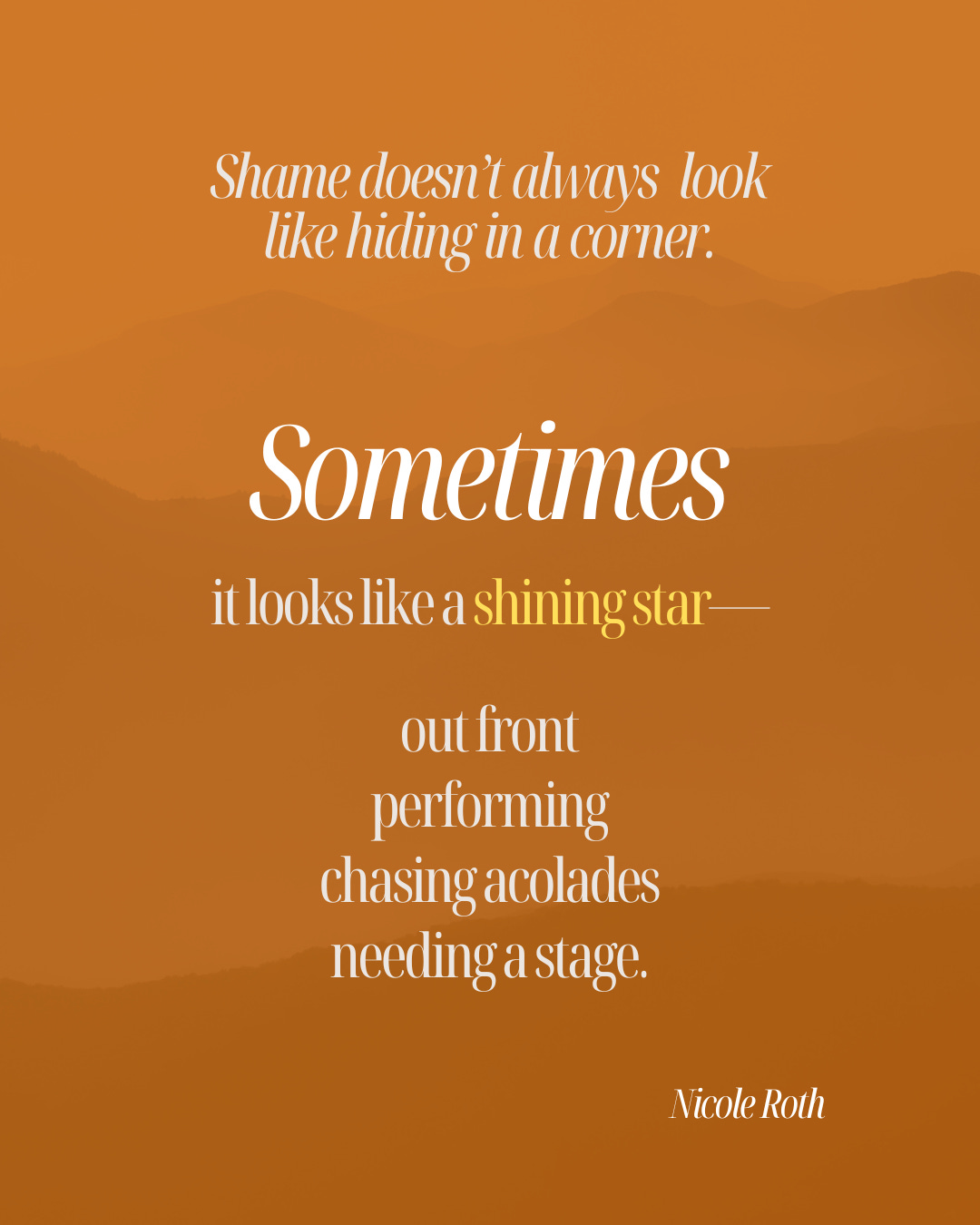
Sometimes it looks like a busy bee — serving constantly, exhaustingly, out of a desperate need to earn a sense of belonging. And sometimes it looks like a stay-safe — someone who tried the other two ways, got burned, and pulled back behind big walls of self-protection, shrinking down, playing small.
I’m writing a new book called Light and Easy, and these three characters — the shining star, the busy bee, and the stay-safe — all live in a town I’m calling Shameville. And they stay there until something hurts enough for them to ask if there might be another way.
When Pain Gets Your Attention
Almost always, it takes pain to get us there. Our health starts to collapse. Our relationships start to crumble. Something becomes painful enough for us to say, this is not working for me anymore. And that’s not punishment — it’s an invitation.
For me, one of those invitations came through my body. I’ve had Hashimoto’s — an autoimmune disorder — since my dad committed suicide in 2005. The connection between the spiritual roots of what we carry and what shows up in our bodies is something I’m deeply passionate about, particularly the link between self-rejection, shame, and autoimmunity.
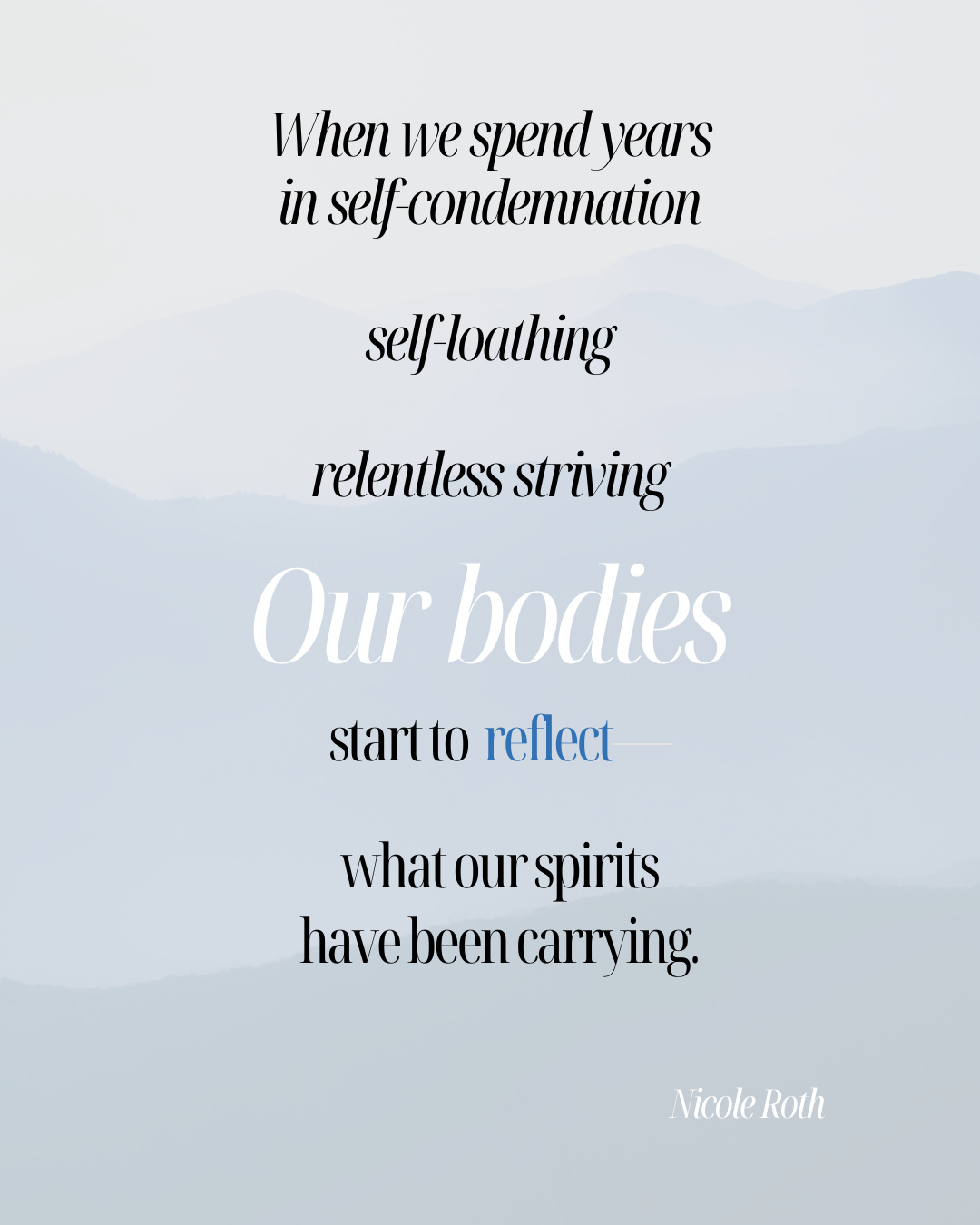
That is not theory. I have lived it, and so have the women I work with.
I serve mainly entrepreneurs — mainly the hard-on-herself kind. Women who can look in the mirror and find every flaw within seconds. Women who know theologically that
God loves them but aren’t sure, in their gut, that He likes them.
Women who are doing all the right church things — leading the women’s ministry, running the programs, doing the Bible reading streaks — and are FINE on the outside while crumbling quietly on the inside.
FINE: Falling Apart on the Inside, Nice Exterior.
I didn’t coin that acronym, but I have lived it, and so have almost every woman I’ve ever worked with in a group setting.
The Alternative: Overflowing, Not Striving
Here’s what the Lord has shown me through Jeremiah 17, and I come back to it constantly because it’s so simple and so clarifying.
Cursed is the man who trusts in man and makes flesh his strength. He shall be like a shrub in the desert and shall not see when good comes.
Blessed is the man who trusts in the Lord. He shall be like a tree planted by water and shall not fear when heat comes.
I think of it as a little stick-figure picture: which way is my heart turned today, in this moment? Am I operating from trust in my own strength and all the voices that pile on — social media, family, in-laws, my own internal critic, the enemy — or am I operating from trust in the Lord, rooted in His love and His word?
The voices are always going to be there. All of them. The question is what we do with them. Are we running to them first, or are we returning first to the One who already knows our identity, our value, and our belonging?
The alternative to the 4 P’s — the alternative to Shameville — I call overflow. When we’re genuinely filled up from the Lord, from His love and grace, from knowing who we are in Him, then we have something real to give. The fruit of the Spirit — including joy — can actually reside and grow in us. We’re not scraping from a depleted bottom trying to give out what we never really received. We’re pouring from something full.
That’s the life I believe we’re genuinely invited into. Not an absence of hardship or challenge — I’d never promise that — but a fundamentally different mode of living. Less scarcity, more abundance. Less striving, more rest. Less performing, more receiving.
God as Cake, Everything Else as Icing
One of the most practical ways I describe this is what I call cake and icing. And I use it especially in the marriage course I teach, called Cherished, but it applies everywhere.
The Lord needs to be our cake. He needs to be the primary source that fills us up — our sense of being valued, being seen, being loved, being heard. Quality time, words of affirmation, belonging — if we go to Him first for all of that, He is more than able to give it. And then if our husband, our friends, our community can also give us some of that? That’s icing. That’s wonderful. But if I make any human being my cake — if I need them to fill what only God is meant to fill — I will end up in misery, and I’ll pull them down with me. It’s not that our relationships don’t matter. It’s that we were never designed to hold the weight of being each other’s primary source.
The Sequoia Moment
I want to share something that happened while I was on one of my daily walks, because it captures so beautifully what this new way of living actually looks like.
I walk every day — I have five dogs, so this is a requirement — and on one of those walks, the Lord quietly said to me:
I want you to do interactive gratitude with me.
So I got my journal out and asked Him what He wanted me to be thankful for. He gave me a picture of myself as a teenager, hugging a sequoia tree on a trip to California. And honestly, I thought it was weird. I thought: is this bad pizza? Have I gotten this wrong?
But I leaned in. I wrote about the trip, about whatever I could remember of that day. And then I asked, okay, what do you have to say back? And He gave me this phrase: sequoia strong. And then a whole download about wanting me to create a forest of sequoias — meaning women who are deep-rooted, who stand strong through storms, who can carry others.
My former self would have had the Canva graphics done by sundown, the logo designed, the program launched, the waitlist open. But I’ve been learning a different way. So instead, I made the design assets, put them on a shelf, and told Him:
I’m awaiting further instructions. This is your thing. You’re going to tell me what this is.
And He has. Step by step. Now I’m on Substack, unfolding it gradually, letting Him set the pace. And the peace in that — the peace of not needing to force it, not needing to perform it into existence — is something I genuinely never had in all my years of achieving.
That’s the light and easy life. Not because nothing is hard. But because it’s His thing, and I don’t need to strive to make it happen. He gets the glory because, honestly, I had nothing to do with any of it.
The Mirror Moment
I want to tell you about one of the simplest and most powerful tools I use with the women I work with. I call it the Mirror Moment, and it came directly out of my own healing journey.
It goes like this: you stand in front of a mirror, you look yourself in the eyes, and you say — in light of God’s love — and then your name — I really, really love you.
That’s it. Thirty seconds. A minute at most.
And I could not do it the first time I was invited to try something like it.
I was in a class called Health Through Inner Healing, and there were about fifteen women in the room, every single one of them dealing with chronic illness. We came back the following week, and not one of us had been able to complete the exercise. Not one. Because what sits beneath that inability — what makes it almost unbearable to look yourself in the eyes and receive love — is shame. The very thing I thought I didn’t have.
This is not self-love in the way our culture uses that phrase. The Bible actually warns against being lovers of self. But the Bible is also clear that we love because He first loved us — and if we skip the receiving part, if we rush right past the letting God love you and jump straight to serving and giving and achieving, we are giving from an empty cup. It doesn’t work. It has never worked. The whole starting point has to be receiving His love — really receiving it, not just knowing it theologically — and then letting everything else flow out from there.
When women progress in that exercise, the next step is to stand unclothed before the mirror and speak those same words over their whole body. It sounds simple. It is often devastating in the best possible way. And I have seen it break shame in women who’ve carried it for decades.
Let God Love You
I wrote an article recently for Sisterhood magazine, and the title was just this: Let God Love You.
It sounds small. But it is massive.
That posture of receiving — hands open, defenses down, not performing to earn it — is the starting point for everything I do with women, and for everything God has done in me. We have to start with His love. Receive it in the midst of whatever has gone on in our pasts. Let that love come in, and then let His grace follow.
A lot of us know about God.
We’ve done the Bible streaks, checked the boxes, memorized the scripture — and none of that is bad. But there is a difference between learning about someone and actually talking to them, actually hearing what they want to say to you.
For a long time, I had a performative relationship with the Lord. I did the things. And He was very patient, and very loving, and eventually very clear: did you learn about me? Did you actually talk to me? Did you hear what I have to say to you?
That broke something open in me, and it’s the invitation I want to pass on to every woman reading this.
You don’t need to check any more boxes. You don’t need to earn your way into His love. You don’t need to keep all the plates spinning. The pressure? It is not yours to carry.
There is a life waiting on the other side of striving — one that’s rooted deep, that stands through the storms, that overflows rather than scrapes. It takes time to get there. It takes honesty, community, and more than one hard look in the mirror. It takes letting Him set the pace instead of charging ahead on your own. But it is more peaceful, more fruitful, and more genuinely joyful than anything the 4 P’s ever gave me.
And I know that because I used to live in Shameville.
I don’t live there anymore.
Nicole Roth is a joy coach, author, and dietitian whose company, Restoring Belovedness, walks women through a five-course journey from condemnation to confidence, from striving to overflow. Her book The Joy Quotient is available now, and her new book Light and Easy is in progress. Find her community and resources through her Substack and website.
Links:
Https://nicoleroth.com/delight - assessment and masterclass
Substack - https://substack.com/@sequoiastrong
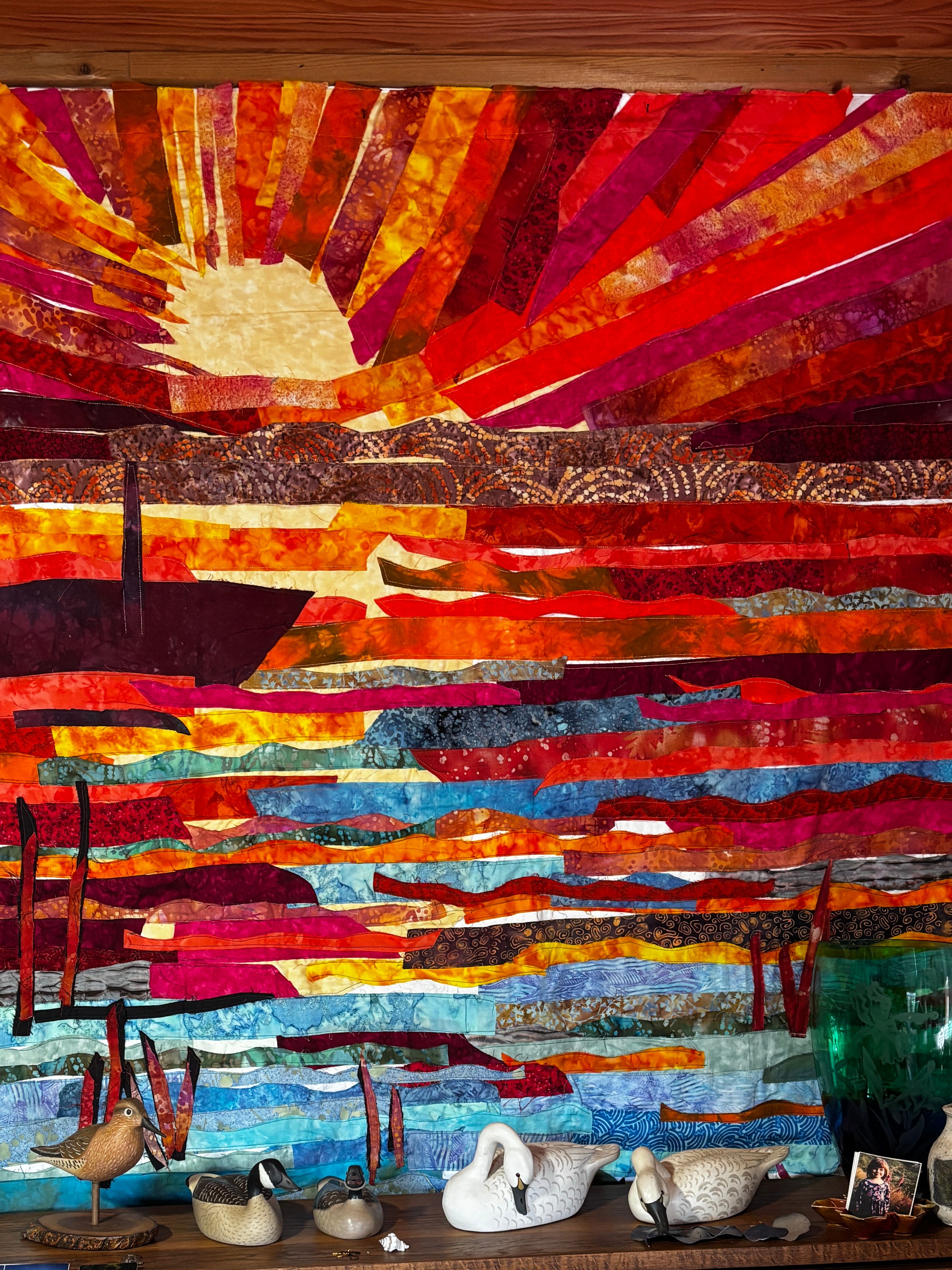
This is a quilted banner I had made for church years ago.
I had a blank spot on my bedroom wall and it works beautifully there.
Perfect with the little hand carved duck decoys!
The beautiful green vase on the right was sandblasted and designed by my highly talented sister, Ann.

My son Jed took me on a mama/son date! So much fun….
See ya next week!
Be sure to share this episode with someone who needs it!
Jan
It was such a delight to have this conversation with you, my friend! You are such a treasurer and I pray that your audience is blessed by our time together! 🙏🙌🫶🏼